Uniformed. Unnamed
Mixed media
79 cm x 60 cm x 53 cm
Artist’s Statement
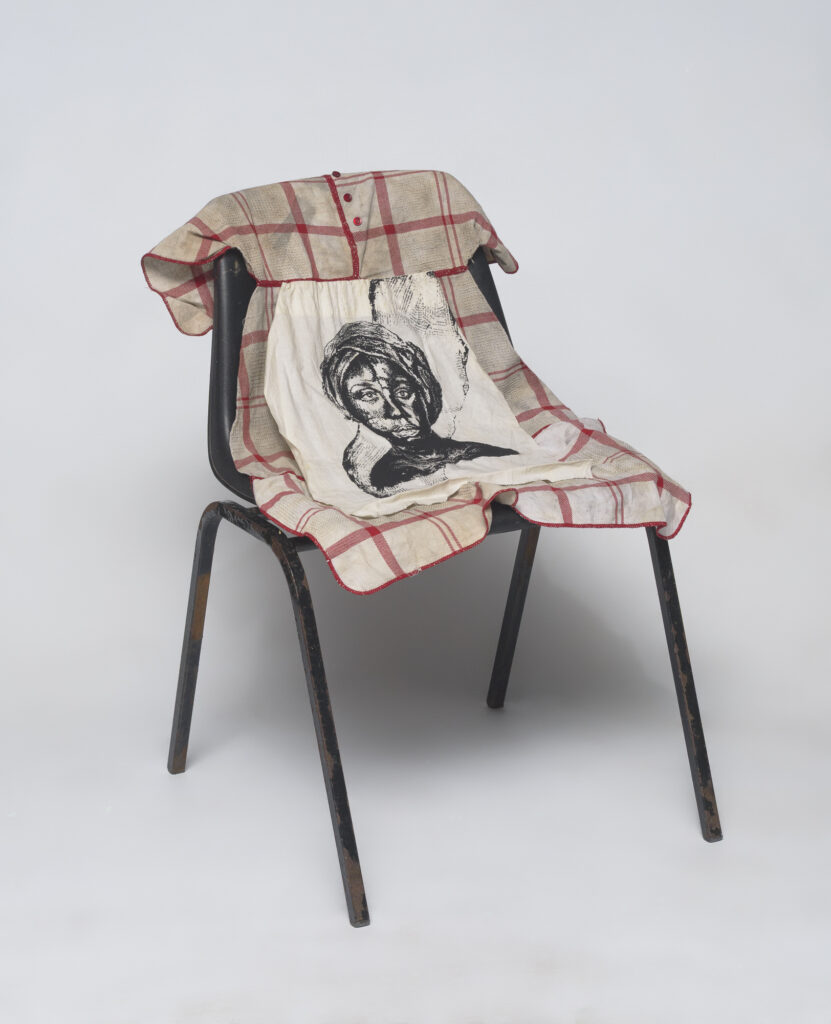
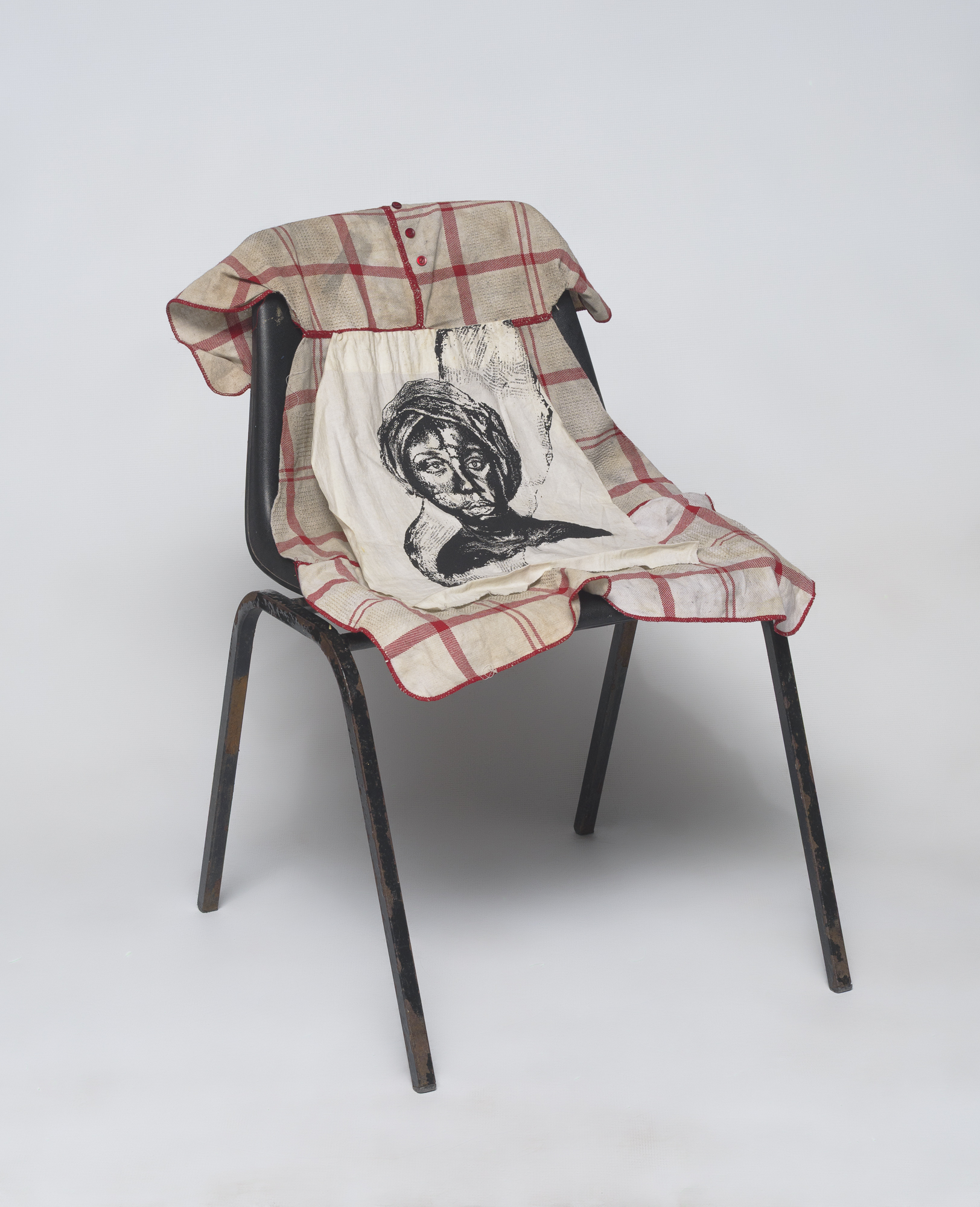
Uniformed, Unnamed is an installation that reflects on the lived experience, erasure, and emotional weight carried by domestic workers in South Africa, with the identity of Mama Dineo at its centre. The work is crafted from used and used dishcloths, hand-sewn into the shape of a domestic worker’s uniform — complete with an apron that bears a striking black-and-white portrait.
The choice of dishcloths as material is intentional. These cloths — mundane, utilitarian, overlooked — are constant companions in the lives of domestic workers. They absorb, polish, and clean, yet remain taken for granted. Like domestic workers themselves, who often take on the mess of others without recognition. In this work, they are transformed into a uniform: an emblem of a labouring class expected to perform with grace under invisibility.
At the centre of the piece sits an apron, not merely functional, but personal, bearing a screen-printed portrait of Mama Dineo rendered in raw black ink. The portrait is unflinching: it demands to be seen, expression stoic yet soulful. Screen printing, with its high-contrast and graphic clarity, allowed me to transfer her presence with precision and permanence. It is a medium often used for mass reproduction, but here, it is used to preserve a singular, personal identity within a system that so often erases it. The use of black ink further echoes themes of labour, identity, and resistance.
The apron is an object symbolic of both service and protection. The apron shields the body, but here it also reveals identity, memory, and quiet resistance. The figure — rendered in harsh contrast, emotionally unflinching — stares directly at the viewer. It demands recognition. By printing Mama Dineo’s face on the apron, her identity is stitched into the uniform, not separate from it. It asks the viewer to confront the weight of that fusion — where does the worker end, and the woman begin? Uniformed, Unnamed” is a tribute, but not a romantic one. It is a refusal to let those who clean our homes remain invisible. It asks: ‘Why do we still rely on women like Mama Dineo to carry the nation’s care — silently, and in uniform?’
Gallery
Click on image to enlarge