
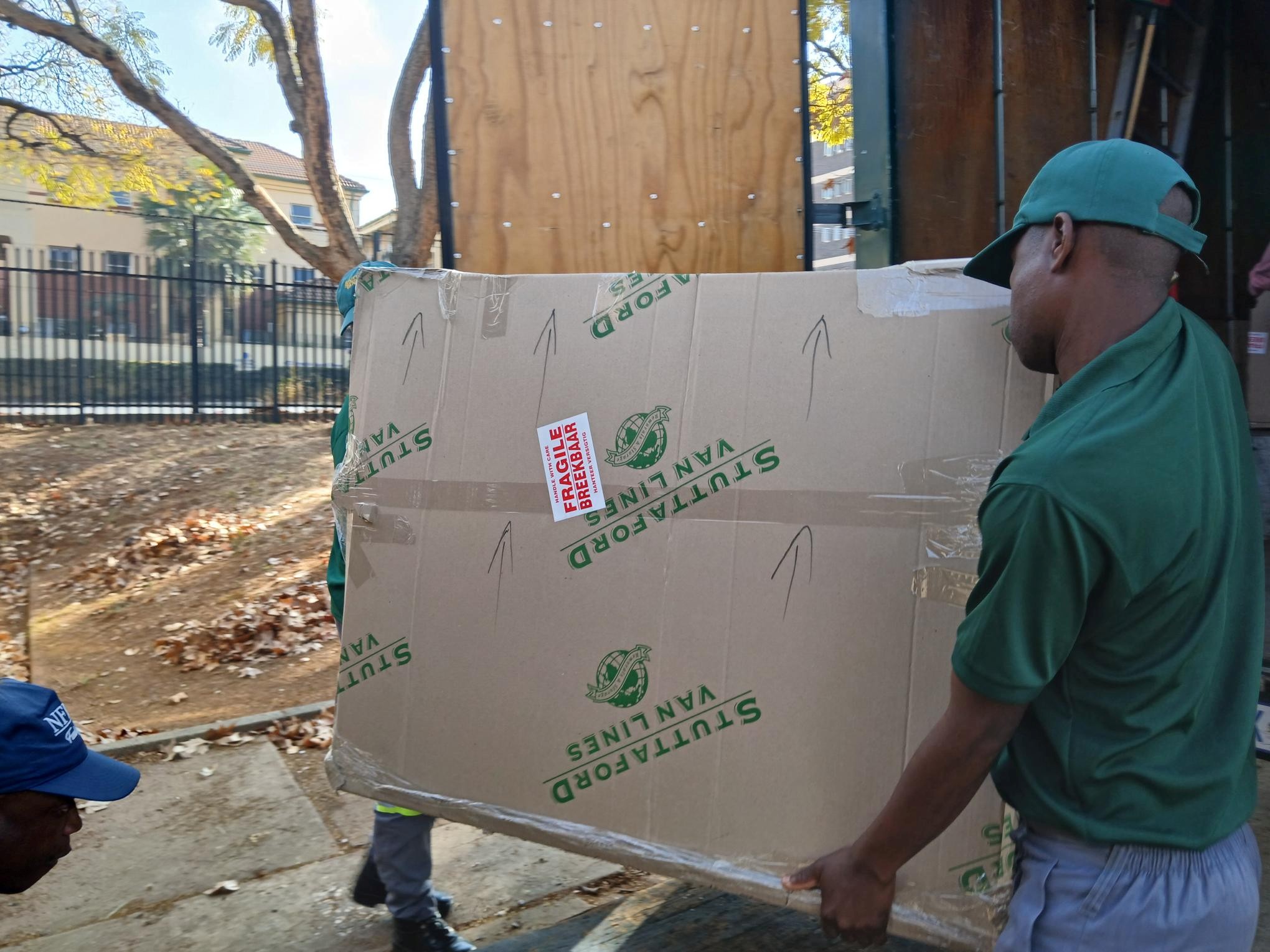
For visitors to the Sasol New Signatures exhibition, the spotlight naturally falls on the incredible artworks showcased throughout the Pretoria Art Museum, few realise the enormous logistical operation that takes place behind the scenes long before the doors of exhibition open. As the competition’s long-standing official logistics partner, Stuttaford Van Lines is responsible for collecting, packing and transporting hundreds of artworks from the eight collection points across South Africa, ensuring every piece arrives safely for final judging and of course the highly anticipated annual exhibition. We sat down with Margarida Fernandes, Fine Art Executive at Stuttaford Van Lines, about the planning, specialist expertise and care involved in transporting some of the country’s most exciting emerging contemporary artworks. She also shares some practical advice for artists and collectors on packing, protecting and moving their own treasured artworks.
Stuttaford Van Lines has been the official logistics partner of the Sasol New Signatures Visual Arts Competition for many years. What does this partnership mean to your company, and why is supporting emerging South African artists important to you?
Our long-standing partnership with the Sasol New Signatures Visual Arts Competition is something we are extremely proud of. As one of South Africa’s oldest and most respected art competitions, it plays a vital role in discovering and nurturing emerging artistic talent. For Stuttaford Van Lines, this partnership is about far more than transportation. It is an opportunity to contribute to South Africa’s creative economy and help ensure that talented artists from every corner of the country have the opportunity to showcase their work on a national platform. We believe that art has the power to inspire, challenge perspectives and reflect the diverse stories of our society. By helping artists safely deliver their works to the competition, we play a small but meaningful part in supporting the cultural landscape of South Africa.
Every year your team is responsible for collecting, packing and transporting dozens of selected artworks from across South Africa to the Pretoria Art Museum. Can you take us behind the scenes of what goes into coordinating such a complex operation?
The process begins long before the artworks are physically collected. Once the number of selected entries are confirmed, our logistics teams coordinate collection schedules across multiple provinces. Every artwork is assessed individually to determine the most suitable packing and handling requirements. Our teams prepare detailed routing schedules, ensure the appropriate vehicles and materials are available, and coordinate closely with competition organisers. Because artworks originate from various locations nationwide, timing, communication and precision are critical. The success of the operation depends on meticulous planning and collaboration, ensuring that every piece arrives safely and on schedule for judging and exhibition preparation.
Transporting artworks is very different from moving household goods or commercial freight. What makes it so unique, and what extra care is needed when handling the Sasol New Signatures artworks?
Art transportation requires a highly specialised approach because many works are unique and cannot simply be replaced if damaged. Our teams are trained in fine art handling techniques and understand the importance of protecting delicate surfaces, structural elements and sensitive materials. We use customised packing methods based on the medium and construction of each artwork. This may include protective wrapping, cushioning, custom crating and secure load configurations within the vehicle. Throughout the process, artworks are handled with minimum movement and maximum care. Equally important is understanding that every artwork is different. Contemporary artists often experiment with unconventional materials and complex constructions, so our team must continually adapt our handling methods to suit each individual piece.


The competition showcases everything from paintings and ceramics to large-scale sculptures, installations and mixed-media works. What have been some of the most technically challenging or unusual pieces your team has had to transport over the years?
One of the most fascinating aspects of the competition is the incredible variety of works submitted each year. We have transported large-scale sculptures, intricate ceramic installations, fragile mixed-media works and pieces incorporating found objects, glass, textiles and even organic materials. The most technically challenging works are often those with unusual dimensions, delicate protrusions or multiple components that need to be assembled later. Some installations require specialised packing solutions and detailed inventories to ensure every individual element arrives intact. These challenges push our teams to be innovative and adaptable. Every year presents new and unexpected logistical requirements, which is part of what makes working on the competition so rewarding.
Do any memorable moments or standout stories from your years working on the competition come to mind?
There have been many memorable moments over the years. What consistently stands out is the creativity and ingenuity of the artists. Our teams are often amazed by how everyday materials can be transformed into powerful works of art. One recurring challenge is transporting large installation pieces that were never designed with transportation in mind. In these situations, our teams work closely with artists to develop customised packing solutions or disassembly plans that allow the work to travel safely and be reassembled at the museum. Those experiences highlight the importance of collaboration between logistics professionals and artists. When challenges arise, creativity is often required from both sides to achieve the best outcome.
Once the selected works reach the Pretoria Art Museum, what happens next?
Upon arrival at the Pretoria Art Museum, each artwork is carefully unloaded and transferred to a designated receiving area. Our team works alongside competition organisers and museum personnel to ensure every piece is accounted for and handled according to established procedures. The artworks are then unpacked and visually inspected to confirm that they have arrived in the same condition in which they were collected. Once inspections are completed, the works are positioned in the appropriate areas for the judging process and subsequent exhibition installation. Throughout this stage, attention to detail remains critical. The objective is to create a smooth transition from transportation to exhibition preparation while maintaining the highest standards of care.
After working with thousands of artworks over the years, what has surprised you most about the creativity, ingenuity and diversity of South Africa’s emerging artists?
What continues to impress us is the remarkable diversity of artistic expression represented in the competition. South African artists draw inspiration from a wide range of cultural, social, environmental and personal experiences, resulting in work that is both deeply local and globally relevant. We are constantly surprised by the innovative use of materials and techniques. Many emerging artists challenge traditional conventions and experiment with new forms of visual storytelling, often producing works that are both thought-provoking and technically impressive. Year after year, the competition demonstrates that South Africa has an extraordinary depth of creative talent and a vibrant future for the visual arts.
What are your top five tips for artists, art buyers when packing, protecting and transporting their own artworks to ensure they arrive in the best possible condition?
Ultimately, preparation is key. The more care taken during packing and planning, the better the chances of the artwork arriving safely and in exhibition-ready condition.
- Use the Right Packaging Materials: Invest in quality protective materials such as bubble wrap, foam corners, acid-free tissue paper and sturdy cartons or crates. Proper materials significantly reduce the risk of damage during transit.
- Protect Surfaces First: Always ensure painted, varnished or delicate surfaces are protected from direct contact with wrapping materials. Use appropriate barrier layers before applying additional protective packaging.
- Secure Movement Inside Packaging: An artwork should not shift or move within its packaging. Internal movement is one of the most common causes of damage during transportation.
- Label Clearly and Handle Carefully: Mark packages clearly with handling instructions such as “Fragile,” “This Side Up,” or any other specific requirements. Clear communication helps prevent accidental mishandling.
- Seek Professional Assistance for Valuable Works: For high-value, oversized, fragile or irreplaceable artworks, it is always advisable to work with experienced art logistics professionals who understand the specialised requirements of fine art transportation.
Anything else you would like to add?
Stuttaford van Lines would like to take this opportunity to wish Sasol New Signatures and the finalists all the very best with their competition and we look forward to seeing the final winning artworks.


