

Artwork Details
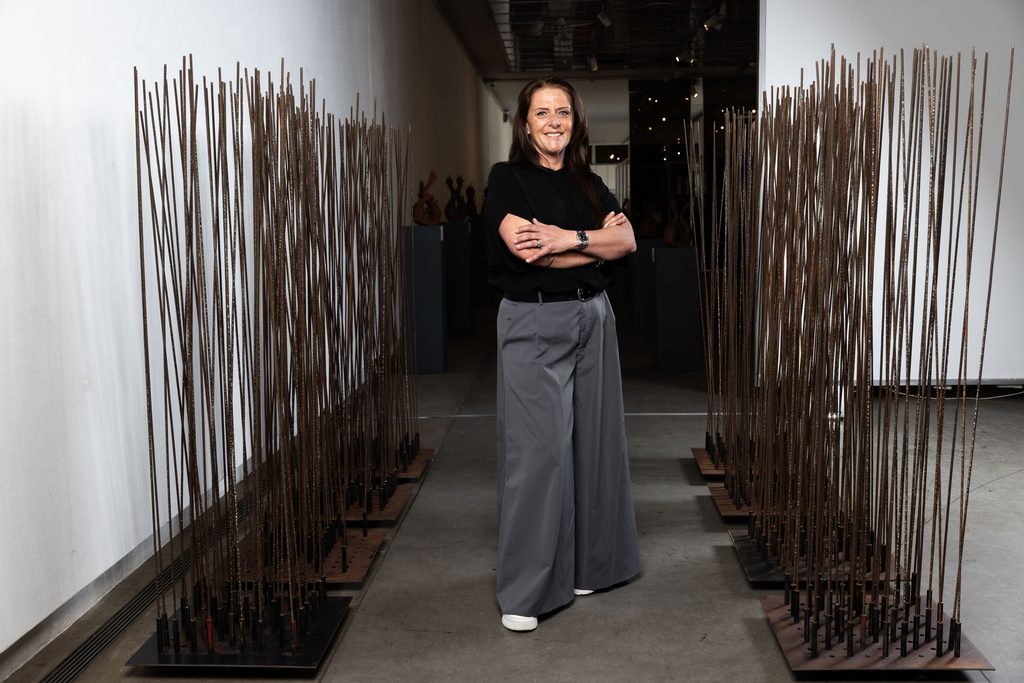
Echoes of silence, 2025
Steel
Artist Biography
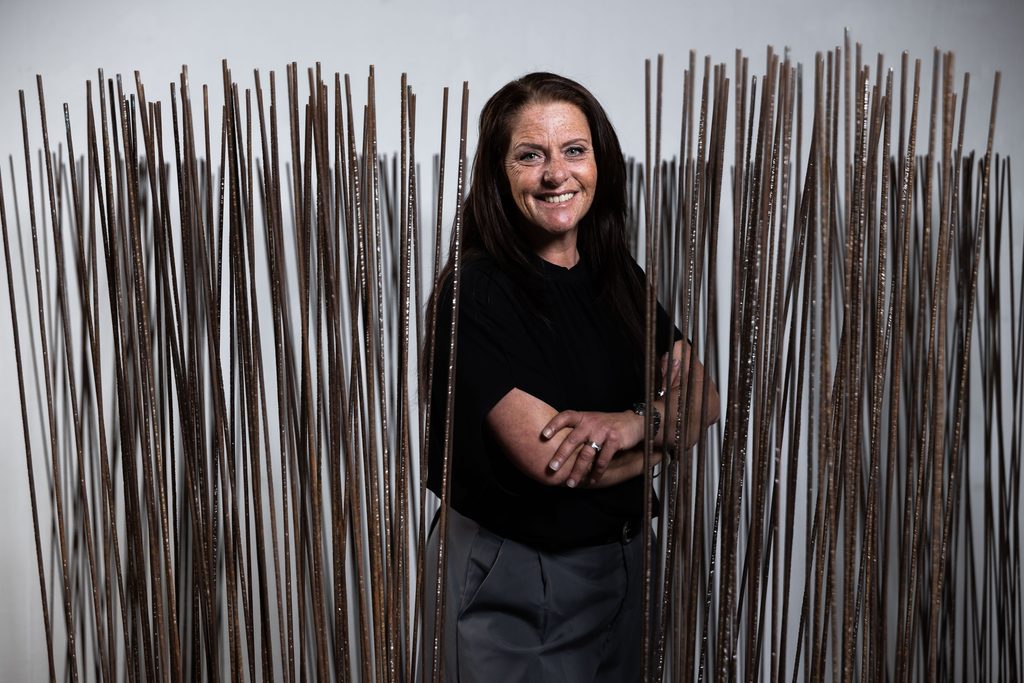
Charné Mungur is a female artist from Gqeberha in the Eastern Cape. She is currently in her Honours year of her Visual Arts degree at Nelson Mandela University, with a focus on Fine Arts. She is a mixed-media artist who combines printmaking with sculpture, challenging materiality and not conforming to traditional materials. As a mature student, she brings many years of experience in the corporate sector, primarily focused on design, photography, and marketing.
While still maintaining her career, through her studies, she is expanding her digital art knowledge into a more hands-on, three-dimensional space where she has found a sense of belonging. She can draw from lived experiences, which gives her the confidence to focus on and challenge contemporary issues through her work. Currently, her focus is primarily on gender-based violence, challenging the systems that continuously fail not only victims of these crimes, but also women and children who remain vulnerable in the absence of justice and the systems that are meant to protect them. Her work has been influenced by various South African visual artists, including Jenna Burchell, Diane Victor, and Anton Smit.
Q&A
Tell us what your reaction was when you received the news that your work had been selected as one of the final 7 in the Sasol New Signatures Visual Arts Competition 2026?
It was quite an emotional moment. Beyond the pure excitement, it is incredibly special to know that my piece will serve its purpose and do exactly what it was intended to do on a national platform.
Is this your first time entering Sasol New Signatures? If so, what prompted you to enter? If not, how many times have you entered, and what keeps bringing you back to the competition?
This is my second year entering Sasol New Signatures. I first entered in 2025; my submission, 5271 Days Behind Trauma, was selected as a finalist in the regional round.
As South Africa’s longest-running art competition, what does being part of this competition mean to you at this stage of your artistic journey?
As a mature student, having begun my Bachelor of Visual Arts at Nelson Mandela University at the age of 45, I initially saw art as a hobby and photography as my passion. Throughout my studies, however, I found my place in sculpture. Starting a career in sculpture at this stage once felt daunting; however, being selected as a finalist in Sasol New Signatures in 2025 gave me confidence in my practice and encouraged me to challenge myself and push my concepts further.
Sasol New Signatures is a prestigious competition that pays homage to emerging artists throughout South Africa, so being selected as a finalist for two consecutive years is an incredible honour. It encourages me to continue challenging myself and my practice and to cement my position as a professional sculptor in South Africa.
Tell us a little about your artistic journey to date.
I’ve always had a keen interest in art and have been most comfortable with photography. It was not until I started my Bachelor of Visual Arts at Nelson Mandela University, when I was introduced to all streams, that I realised sculpture felt like part of who I am. While it was mandatory to explore all the available streams, I found that I poured my heart and soul into sculpture, and it gave me the opportunity to step outside my two-dimensional comfort zone into the hands-on world of three dimensions.
Who or what has had the greatest influence on you as an artist, and how has that influence shaped your work?
The fact that, at 45 years old, I was able to enter the academic space for the first time since I matriculated in 1995. I was not able to study after school, and it was always a regret. After completing two photography short courses at the university, I applied for a Bachelor of Visual Arts at Nelson Mandela University. For various reasons, my application was unsuccessful for three consecutive years. The only contact I had with the department at the time consisted of two email addresses, and for three years I emailed both nearly monthly. I am incredibly grateful to those two individuals, as I do not believe I would be where I am today if it were not for them. My lecturers have had a significant impact on my journey to becoming a sculptor. I was never given special treatment because of my age; if anything, I was pushed a little further and challenged beyond where I was comfortable. Their encouragement and support have strengthened my confidence, discipline, and artistic growth, which have been invaluable on this journey.
Tell us about your preferred medium or materials.
Since my focus is largely on challenging societal and environmental issues, I often select materials that challenge me as an artist. I am comfortable working with natural materials such as wood and clay; however, I am increasingly drawn to the challenges presented by steel and other metals, which I have incorporated into my practice over the past few years.
Tell us about the work you submitted. What inspired the piece, and what would you like viewers to understand or take away from it?
Echoes of Silence responds to the 2024 statistics on Gender-Based Violence in South Africa, published by the HSRC. The number of reported cases of sexual violence left me with an overwhelming sense of heaviness, and I felt compelled to respond through my work.
It is not my intention to speak for victims, but rather to normalise dialogue around what has been labelled as a national disaster. It is an uncomfortable topic of discussion; if we do not face it, what significant impact can we have?
Most often, victims carry a sense of shame or embarrassment and therefore internalise rather than speak about it. So, as much as this installation encourages dialogue, it also tells victims that they are seen and heard.
I am acutely aware that over the past decades, society has relaxed its definition of gender based violence, and often the victim is seen as the instigator or cause thereof. This is what I am challenging. No woman asks to be violated.
As a wife, mother, daughter, and, importantly, as a woman, I feel an immense duty to challenge these current norms and contribute to change through my art practice.
Can you take us behind the creative process of the work you submitted? Was there anything unexpected, challenging or exciting that emerged while making it?
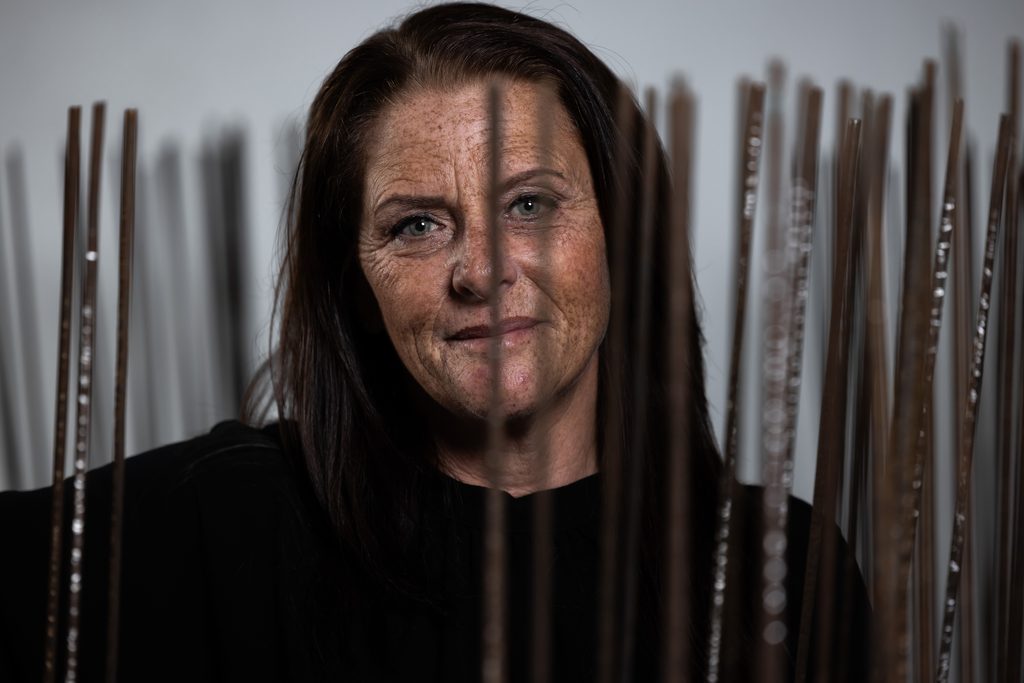
Initially, I was confident that I could complete a mark for each reported case, a total of 2,150,342 marks, with enough time to pursue other works I had planned. On my first day of mark-making, using a single rod and a Dremel tool, I produced 3,160 marks in six hours. This initially felt like a victory, until I calculated that, at that rate, the work would take approximately 680 days to complete. I was repeatedly told that the concept was strong enough without physically making every mark. Morally and ethically, it was important to me that each reported case be individually acknowledged. My process therefore had to evolve, and I eventually developed a method that enabled me to produce up to 70,000 marks in a single day.
The completed installation weighs approximately 270 kilograms, which posed an additional physical and logistical challenge, particularly since I had to move and manage the work in sections on my own. This was also an important part of the process for me; it was physical strain and discomfort, but I saw this as a small sacrifice in order to communicate the emotional weight that is inflicted on victims of gender based violence.
Which South African artists do you admire and why?
I admire the works of Jenna Burchell. A project-based artist, she creates visually understated work; however, when combined with technology, it tells a story and carries strong meaning. She most often uses natural materials, which form part of the story. Additionally, I admire Angus Taylor for his unconventional use of materials and often the sheer size of his works.
Being selected as a finalist can be an important stepping stone for an emerging artist. What are your hopes and ambitions for your practice beyond the competition?
Being selected as a finalist is an important stepping stone for any emerging artist. Not only is it a recognition of your work, but it also immediately features it on a national platform. Last year, this gave me the confidence to challenge myself and my practice. This year is a defining moment as I leave the comfort of the academic space and immerse myself as an artist within the public domain.
Where do you see yourself in 5 years and 10 years?
Once I complete my Honours in Bachelor of Visual Arts this year, I plan to take a break from formal studies to focus entirely on my art practice and develop collections for possible future collaborations and group exhibitions. This will give me the opportunity to expand my body of work, further develop my artistic identity, and explore new concepts and materials. I see this as an important phase in establishing and marketing myself as a sculptor within the South African art landscape.


